
Is There PFAS “Forever Chemicals” In Houston Water?
PFAS, often referred to as “Forever Chemicals,” are present in Houston water utilities and tap water. The question is: how much, and should you be concerned? Testing reported under the EPA’s fifth Unregulated Contaminant Monitoring Rule (UCMR 5) has detected PFAS in some Houston-area public water systems. Check your utility’s latest water quality report to see how its results compare with the EPA’s Maximum Contaminant Levels (MCLs).
According to the Texas Tribune, 49 public water utility systems in Texas have reported exceeding the U.S. Environmental Protection Agency’s newly established federal standards and federal limits for five types of forever chemicals in American drinking water, based on data provided to the federal agency. Experts believe the actual number could be higher, as not all municipal water supplies and water systems have submitted their results.
Your utility’s Consumer Confidence Report lists the PFAS it has tested for and detected. PFAS monitored under UCMR 5 include short-chain compounds such as:
- PFBA
- PFHxA
- PFPeA
Solutions
Suggested Products
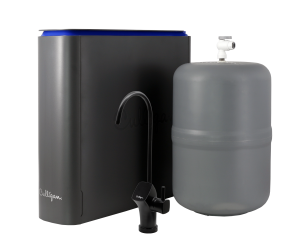
The Aquasential® Smart Reverse Osmosis Water Filter (RO)
- 7 stages of filtration and 12 filter options
- Certified for reduction of 58 contaminants
- 2-in-1 sediment and carbon filter screens out sediment and particles
- Can alert you and your dealer when service or filter replacements are needed

Aquasential® Whole House PFAS Water Filter
- Third-party certified to ANSI/NSF standards, the Aquasential® Whole Home PFAS Filter can reduce total PFAS by up to 99.9%.
- The PFAS filtration system operates effectively with minimal water pressure loss, even at higher flow rates.
- The built-in Smart Flow Monitor records the water treated by your system and calculates the remaining filter life, so you know when it’s time to change the filter.
- Easily check system performance, get alerts when filtration media needs to be changed, monitor water usage and set conservation goals using the Culligan Connect App right on your phone.
What are PFAS?
PFAS — short for perfluoroalkyl and polyfluoroalkyl substances — are man-made chemicals that are widespread and remarkably persistent in the environment. This family of chemicals, nicknamed “forever chemicals,” break down very slowly and can remain in soil, water and the human body for years. These hazardous substances have been used since the 1940s to resist heat and repel oil and water, and they are found in thousands of consumer products, from nonstick cookware to firefighting foams. According to the EPA, exposure to certain PFAS has been linked to adverse health effects.
Although there are more than 12,000 known PFAS compounds, the EPA’s newly announced standards set limits for five specific chemicals: PFOA and PFOS are restricted to 4 parts per trillion, while PFHxS, PFNA, and HFPO-DA are limited to 10 parts per trillion.
For reference, a part per trillion (ppt) is roughly equivalent to a single drop of water in 20 Olympic-sized swimming pools or one second in 32,000 years.
Why Is My Houston Water Contaminated With PFAS Forever Chemicals?

Certain parts of the Houston area may be more vulnerable to elevated levels of PFAS due to the city’s history of industrial and commercial activity. As a major metropolitan area with significant petrochemical and manufacturing industries, Houston could experience varying degrees of PFAS contamination across its water sources including Lake Houston, Lake Conroe, and the San Jacinto River.
Living near locations such as airports, military bases, industrial sites, or firefighter training facilities can put residents at higher risk of PFAS exposure. These sites have historically used PFAS-containing firefighting foams during training and emergency response activities, which can seep into the ground through urban runoff and agricultural runoff, and contaminate nearby water supplies and source water. Houston residents living near these areas, including those around Ellington Field Joint Reserve Base, George Bush Intercontinental Airport, or William P. Hobby Airport, may want to learn more about PFAS levels in their tap water.
Manufacturing and industrial operations in Houston are another important factor to consider. With its robust economic landscape and strong presence in the petrochemical and energy sectors, the city has seen a variety of manufacturing activities — industries where PFAS compounds have often been used. Over time, these chemicals could have entered the local water system, potentially leading to elevated PFAS levels in certain neighborhoods.
For residents of Houston, understanding the current PFAS levels in their water supply is critical. Culligan of Houston, with its expertise in water treatment and purification, is well-equipped to provide residents with detailed information and effective solutions to address any PFAS-related concerns.
PFAS Forever Chemicals 2024 EPA Regulations
On April 10, 2024, the United States government introduced its first-ever national, legally enforceable drinking water standard to protect citizens from PFAS forever chemicals. The new rules to regulate six types of PFAS chemicals were developed based on feedback from the public and stakeholders, with over 120,000 comments considered. The EPA believes that these rules will protect about 100 million people from PFAS exposure over time, prevent thousands of deaths, and reduce tens of thousands of serious illnesses related to PFAS.
The EPA has also announced that it will be offering substantial funding, including $1 billion from the Bipartisan Infrastructure Law, to help test and treat PFAS in not only public water systems but address contamination in private wells as well.
The new regulations set limits known as ‘Maximum Contaminant Levels or MCLs’ for individual PFAS like PFOA, PFOS, PFHxS, PFNA, and HFPO-DA, as well as a combined limit for mixtures of PFHxS, PFNA, HFPO-DA, and PFBS. While these regulations will help to protect from 6 PFAS, there are over 15,000 PFAS chemicals.
Areas where PFAS levels exceed these new regulatory standards and federal regulations will be required to reduce these perfluorinated chemicals within five years to ensure safe drinking water and protect public health.
EPA’s ongoing efforts under the Unregulated Contaminant Monitoring Rule (UCMR) involve collecting data for unregulated contaminants suspected in drinking water. This data aids in regulating such contaminants. The fifth UCMR phase (UCMR 5) requires sampling for 30 chemical contaminants, including PFAS, between 2023 and 2025.
Under the EPA’s Unregulated Contaminant Monitoring Rule (UCMR 5), water systems nationwide, including in Texas, are required to monitor for PFAS between 2023 and 2025.
2026 EPA PFAS Update
On May 18, 2026, the U.S. Environmental Protection Agency announced proposed changes related to PFAS drinking water regulations. The update keeps federal drinking water limits for PFOA and PFOS in place, but it may change how certain parts of the rule are implemented.
Under the proposal, some public water systems may be able to request additional time to meet enforceable limits for PFOA and PFOS. The EPA also proposed reviewing parts of the rule related to PFHxS, PFNA, HFPO-DA, commonly known as GenX chemicals, and the PFAS hazard index.
For homeowners, the update is a reminder that PFAS regulations are still developing. Public water systems may need time to test source water, review treatment options, secure funding and install new treatment equipment. In the meantime, homeowners who are concerned about PFAS can take a more immediate step by learning more about their own water quality.
Culligan offers professional water testing and filtration solutions designed to help reduce PFAS in drinking water. Depending on your home’s water quality, treatment options may include reverse osmosis, activated carbon filtration or other advanced filtration systems.
Further Explanation On What “Forever Chemicals” Are
PFAS, commonly known as ‘Forever Chemicals,’ water contamination impacts residents in many places across the United States, including the Houston area. The problem with PFAS and similar contaminants is that, until recently, few people knew or understood them. Compounding this issue, PFAS have become nearly ubiquitous in our environment.
It started in the early 1940s, when water and heat-resistant chemicals containing per- and polyfluoroalkyl substances were engineered to help create non-stick products (Teflon), fire retardants, and other common consumer goods. What wasn’t understood at the time, however, was that Teflon and other products using PFAS wouldn’t naturally decay in nature–or the human body.
Some PFAS can build up in the body over time, which is why they’re often called ‘forever chemicals.’ Several of the most studied PFAS have been phased out of use in the U.S., but they remain in the environment, and that can include water supplies.
Recent PFAS News In Texas
The city of Dallas is suing 3M, DuPont, and other chemical companies, alleging they contaminated the city’s drinking water and water supply with this class of chemicals. The lawsuit is part of a larger multi-district litigation effort involving cities and individuals across the country, similar to cases in West Virginia and along the Ohio River.
Dallas claims that firefighting foam containing PFAS was used for decades at nearby airports, industrial sites, and military bases, leading to contamination of groundwater and soil through industrial runoff and waste streams. While Dallas’s tap water safety currently meets new EPA standards for PFAS according to Consumer Confidence Reports and water quality reports, the city seeks compensation for the high costs associated with ongoing water monitoring and treatment methods. This lawsuit follows similar actions by other Texas cities and the Texas Attorney General, and comes amid broader national settlements involving 3M, DuPont, and other corporate partners for PFAS-related damages.
How to Remove PFAS Forever Chemicals From Your Houston Water
Removing PFAS Forever Chemicals from tap water is a complex process that requires advanced filtration methods and water treatment techniques. Culligan offers several water filtration products that can help address common contaminants and harmful contaminants like PFAS. Here are some options:
Culligan PFAS filters are designed to reduce per- and polyfluoroalkyl substances (PFAS) in drinking water.
Culligan systems use advanced filtration technologies including Ion Exchange with a high Flow Rate to effectively target and reduce PFAS contamination. One of the primary methods employed is activated carbon filtration, which adsorbs PFAS molecules and traps them within the filter material. This can lower PFAS levels in your home’s water.
Culligan’s PFAS filters are certified by independent third-party organizations to verify their effectiveness in removing PFAS from water. While specific certification details for each PFAS filter may vary, Culligan products are typically certified to NSF/ANSI standards by organizations such as NSF International or the Water Quality Association (WQA).
These certifications confirm that Culligan’s PFAS filters meet strict industry standards for contaminant reduction and overall performance. Check each product’s performance data sheet for the specific PFAS it is certified to reduce.
Can Store-Bought Pitcher Filters Remove PFAS Forever Chemicals?
Pitcher filters, like those commonly used for home water filtration, may vary in their ability to remove PFAS compounds, often referred to as “forever chemicals” due to their persistence in the environment. Some pitcher filters are designed with activated carbon filters that can help reduce certain contaminants, including PFAS, from drinking water. However, the effectiveness of pitcher filters against PFAS can vary based on the specific brand and model.
If you are concerned about PFAS contamination and want to ensure the efficacy of a pitcher filter in removing these chemicals, it’s advisable to choose a filter certified to reduce PFAS, such as Culligan’s PFAS Filter. Always refer to the manufacturer’s specifications and certifications to determine the filter’s effectiveness against PFAS and other contaminants.
What About PFOA? Where Are They Found?
PFOA, the most notable substance of the PFAS family, was found to be a part of the manufacturing process of Teflon. The EPA sued DuPont in 2005 for failing to report a health risk to both humans and the environment. The company paid a $10.25 million settlement.
Because of PFOA and PFAS strong molecular structure, they take much longer to break down naturally than other organic chemicals.
Until 2002, PFOA were integral in producing goods which qualities repel dirt, grease, water and stains.
These contaminants can be found in the manufacturing process of a variety of products, including non-stick cookware, carpet-care liquids, treated apparel, upholstery or textiles, sealants, dental floss, floor wax and non-woven medical garments. Though PTFE non-stick cookware was proven to have PFOA levels, a recent study found levels that ranged from undetectable to 4.3 parts per billion, and it is not currently considered a major pathway for PFOA.
In 2019, United Nations experts recommended banning PFOA globally at the Stockholm Convention on Persistent Organic Pollutants.
Problems with PFOA
According to a study from 2002-2005, people who lived in the PFOA-contaminated area around DuPont’s Washington Works facility were found to have higher levels of PFOA in their blood from drinking water. People that drank more tap water, ate locally grown fruits and vegetables, or ate local meat, were all associated with having higher PFOA levels.
Residents who used carbon filter systems had lower PFOA levels.
How PFAS Exposure Can Affect Your Health
Research on PFAS and health is ongoing. According to the EPA, current scientific research suggests that exposure to certain PFAS may lead to adverse health outcomes.
The EPA lists these potential effects of exposure to certain PFAS:
- Reproductive effects such as decreased fertility or increased high blood pressure in pregnant women
- Developmental effects or delays in children, including low birth weight, accelerated puberty, bone variations or behavioral changes
- Increased risk of some cancers, including prostate, kidney and testicular cancers
- Reduced ability of the immune system to fight infections, including reduced vaccine response
- Hormone disruption, affecting how the body’s natural hormones work
- Increased cholesterol levels and/or risk of obesity
Effects depend on the specific PFAS, the level and length of exposure and individual factors. If you have health questions, talk to your doctor.
Why It’s Hard to Fully Understand PFAS Health Risks
There’s still a lot to learn about PFAS and their health effects because:
- There are thousands of different PFAS chemicals in this chemical family, but most animal studies and human studies have only looked at a few of them.
- People face risk of exposure to PFAS in many different ways — through air, food, bottled water, tap water, and consumer products — affecting blood chemistry at different stages of life.
- Analytical methods for detecting these compounds in drinking water continue to evolve.
- The way PFAS are made and used keeps changing due to chemical treatments and industry shifts, which makes it harder to track their harmful effects and potential health risks.
- Drinking water regulations for PFAS continue to evolve.
Other Sources of PFAS Exposure
We are not only exposed to PFAS chemicals through drinking water, they are also found in consumer products we use every day. According to the Agency for Toxic Substances and Disease Registry, PFAS, known for their oil and water resistance, non-stick, and fire-resistant qualities, are commonly added to various everyday products used by most Americans such as the following:
- Cosmetics
- Food packaging: take out containers, food wrappers
- Non-stick pans (Teflon)
- Carpets, rugs, furniture textiles, window treatments, car seats
- Stain and waterproof clothing
- Outdoor gear
- Umbrellas
- Dental Floss
- Microwaveable popcorn bags
- Firefighting foam and personal protective gear
- And consumer products.

Facebook