Does Reverse Osmosis Lower pH in Houston Water?
The short answer is yes—reverse osmosis can make water slightly more acidic. However, this doesn’t make the water unsafe to drink. Houston residents looking to improve the quality of their tap water often consider reverse osmosis (RO) systems to filter out contaminants and improve water quality. A common question about reverse osmosis is whether it lowers the water’s pH, making it more acidic. Let’s explore why reverse osmosis water tends to be more acidic, what it means for Houston residents, and how Culligan Water’s reverse osmosis systems can provide clean water with peace of mind.
How Reverse Osmosis Affects Houston Tap Water pH
Reverse osmosis is a water filtration process that uses a semi-permeable membrane to filter out contaminants from your water supply. In Houston, tap water comes from a combination of surface water sources like Lake Houston and groundwater from local aquifers. While Houston’s water supply is treated at water treatment plants, it still contains a range of contaminants, such as chlorine, fluoride and traces of agricultural runoff. Reverse osmosis systems can reduce many of these, and they also reduce minerals such as calcium and magnesium that help stabilize pH levels.
As a result, reverse osmosis water typically has a pH between 5 and 7, compared to untreated tap water, which generally has a neutral pH around 7. The pH levels of Houston’s tap water can vary due to factors like water pressure, water flow, and the treatment methods used by Houston Public Works. When filtered, reverse osmosis water tends to be more acidic but still remains safe for consumption.
Why Reverse Osmosis Water Is More Acidic in Houston
The reverse osmosis process is designed to remove contaminants from raw water, including both harmful substances and beneficial minerals. The minerals in Houston’s tap water help maintain the water’s pH, so when these minerals are removed by the semi-permeable membrane of the reverse osmosis filter, the water becomes more prone to changes in acidity.
This happens because minerals like calcium and magnesium act as buffers that prevent drastic fluctuations in pH levels. When they are removed, the water becomes more reactive to environmental factors. The result is slightly acidic water, but still well within safe drinking water guidelines. While the reverse osmosis process reduces contaminants from the water supply, it can cause the pH to drop slightly.
Even though reverse osmosis water in Houston may have a lower pH, it remains safe to drink. The U.S. Environmental Protection Agency (EPA) does not set an enforceable limit for pH. Its non-enforceable secondary standards recommend a range of 6.5 to 8.5, mainly to address taste and pipe corrosion. In fact, many beverages such as coffee and orange juice are far more acidic than reverse osmosis water.
Reverse osmosis lowers pH slightly, and many people prefer the taste of RO water.
Is Acidic RO Water Safe to Drink in Houston?
Yes, reverse osmosis water in Houston is safe to drink. The EPA treats pH as an aesthetic and corrosion issue rather than setting an enforceable health-based limit. Reverse osmosis systems certified for lead, PFAS or nitrate can reduce those contaminants, and the lower pH doesn’t change that.
However, extremely low pH levels in water may cause mild corrosion to plumbing systems over time, especially copper pipes. This is generally only a concern when the pH of the water drops significantly, and the water remains in contact with pipes for extended periods. In most cases, reverse osmosis water does not cause this issue, and the water remains safe for daily use.
Factors That Affect the Final pH of RO Water in Houston
Several factors can influence how much the pH of reverse osmosis water drops:
- Source Water Quality: The pH of Houston’s tap water varies depending on whether the water comes from surface water sources like Lake Houston or groundwater sources. Different sources have different natural pH levels, which can impact the final pH of the filtered water.
- Mineral Content: Houston’s water supply contains a variety of minerals, including calcium and magnesium, that help stabilize pH. When these minerals are removed by the reverse osmosis system, the water becomes more vulnerable to fluctuations in acidity.
- System Performance: The performance of the reverse osmosis system can also affect the final pH of the water. Higher-efficiency systems, such as those with multiple stages of filtration, remove a larger number of contaminants, which can lead to a more noticeable drop in pH. These systems are effective at removing a wide range of contaminants, but the water may become more acidic in the process.
- Air Exposure: When reverse osmosis water is exposed to air, it can absorb carbon dioxide, which reacts with the water to form carbonic acid. This process can further lower the pH slightly, especially if the water is stored in an open container. This is something to consider when storing RO water.
Culligan Reverse Osmosis Systems in Houston
Culligan offers advanced reverse osmosis systems designed to reduce contaminants in Houston’s municipal water at your kitchen tap. These systems can reduce contaminants such as lead, PFAS, arsenic, nitrate and chlorine. Check a system’s performance data sheet for what it is certified to reduce.
Effective Filtration for Houston Water Quality
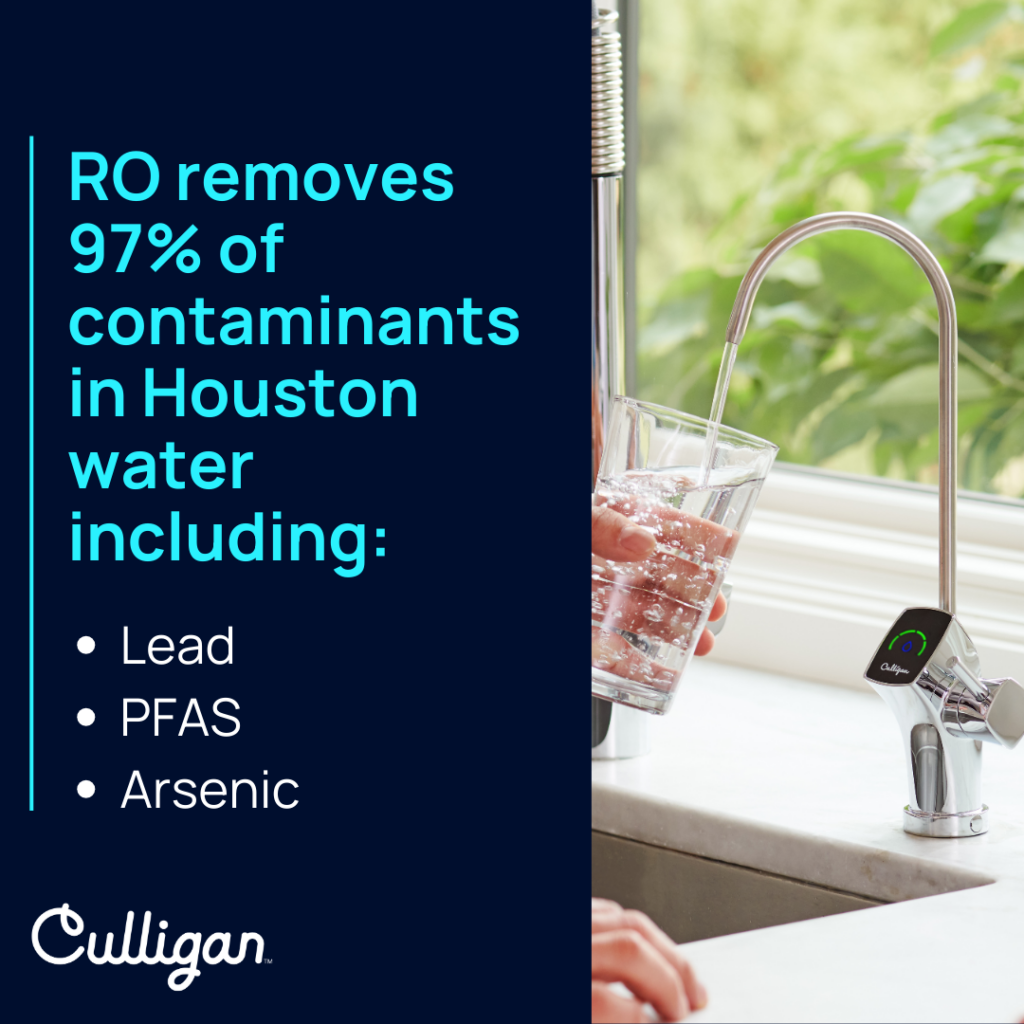
Culligan’s reverse osmosis systems are designed to remove up to 97% of contaminants found in Houston’s water supply, including:
- Lead: Lead can enter water from older plumbing, and according to the CDC, no safe blood lead level in children has been identified. Culligan reverse osmosis systems certified for lead reduction can reduce it at the tap.
- PFAS (Per- and Polyfluoroalkyl Substances): PFAS are a group of synthetic chemicals. According to the EPA, studies have linked exposure to certain PFAS to an increased risk of some cancers and interference with the body’s hormones, among other effects. Some Culligan reverse osmosis systems are certified to reduce PFOA and PFOS.
- Arsenic: This naturally occurring contaminant can be present in both well water and municipal water supplies. The EPA lists skin damage, circulatory problems and an increased risk of cancer as potential effects of long-term exposure above its 10 ppb limit. Culligan systems certified for arsenic reduction can reduce it.
Balancing pH with Culligan Solutions
Reverse osmosis water does tend to be slightly more acidic. To help restore a more neutral pH, Culligan offers optional remineralization filters that add minerals like calcium and magnesium back. These filters help stabilize the pH of the water and improve the taste without compromising the purity of the water.
Should You Raise the pH of Your RO Water in Houston?
In most cases, there is no need to raise the pH of reverse osmosis water in Houston. The water is safe to drink as it is. However, if you are using RO water for specialized purposes, such as brewing coffee, setting up a fish tank, or growing plants in hydroponics, you may prefer to maintain a more neutral pH.
Here are some ways to raise the pH of your RO water:
- Remineralization Filters: These filters add minerals back into the water, balancing the pH and improving taste. Remineralization filters can be installed easily with your existing RO system.
- Alkaline Drops: Alkaline drops can be added to a glass or pitcher of water to raise the pH. These drops are a quick and convenient solution to adjust the pH, especially for people on the go.
- Mineral Containers: Storing RO water in mineral-infused containers can gradually raise the pH over time. These containers passively add minerals like calcium to the water, which helps balance acidity.
Does Reverse Osmosis Lower pH in Houston?
Yes, reverse osmosis does lower the pH of water slightly, but this change is minimal and does not affect the safety of the water. In Houston, where water quality challenges are common due to a combination of surface and groundwater sources, reverse osmosis is a way to reduce contaminants such as lead, PFAS and arsenic. Culligan’s reverse osmosis systems provide purified water with the added benefit of optional remineralization filters to help balance the pH if needed.
Whether you’re concerned about contaminants in Houston’s public water systems or just want clean, high-quality water at home, Culligan offers reverse osmosis systems to meet your needs. Contact Culligan Houston for a free water test today and take control of your water quality with the peace of mind you deserve.
