
Why Houston-Area Homeowners Choose Culligan For Well Water Treatment
Our systems are second to none. The real advantage is that we make treating well water simple.
-
We Treat Your Water, Not A Category
Gulf Coast well water changes as you move across the region, and it changes with depth. The Texas Water Development Board’s geochemical work on this aquifer describes calcium-bicarbonate water in the shallow recharge areas to the north, shifting along the flow path to sodium-bicarbonate water as you go deeper and closer to the coast. The mechanism is sodium on clay minerals trading places with calcium, and because hardness is calcium and magnesium, water that has been through that exchange comes out softer. A well in Montgomery or Grimes County and a well in Brazoria County are not the same water and do not take the same equipment. We start with a test and build the treatment around your numbers, which is why we won’t quote a system over the phone.
-
Nobody Else Is Checking Your Well
Texas A&M’s Texas Well Owner Network says it plainly: in Texas, as across the United States, the government does not routinely test household well water to make sure it is safe to drink. Your driller may have run a bacteria test when the well went in, and after that it is on you. The state licenses drillers through TDLR, but that license covers how a well is built, not what comes out of it. The Lone Star Groundwater Conservation District registers exempt wells in Montgomery County, and the Harris-Galveston Subsidence District permits pumping, but both of those count water rather than test it. Neither has a water-quality role.
-
Expert Installation, And We Maintain It
Culligan has been in water treatment for more than 85 years and it’s all we do. Your local Culligan delivers, installs, and maintains the system for you, so there’s no shipping damage, no unboxing, no guessing about install location, and no third-party service line when it needs attention. Schedule an appointment, then enjoy the water.
-
Make Your Water Work For You
On the fence about whether you need treatment? These are the returns that pay a system off over time.
- Over $437 a year saved on soaps, shampoos and detergents in soft water
- Over $115 a year in gas water heater energy savings
- Up to 50% more life out of dishwashers and washing machines
- No more replacing fixtures and appliances that iron ruined early
Local Resources
Houston Area Well Water
Why Does My Hot Water Smell
Like Rotten Eggs?
Hydrogen sulfide gas, and the reason it shows up in the hot tap first is worth knowing. Texas A&M’s well owner guide lists three sources: decay of organic matter in the aquifer, bacteria converting pyrite minerals where there is little oxygen, and a reaction between the magnesium anode rod inside your water heater and sulfate in the water. That third one is why so many homeowners tell us only the hot water smells. Sulfate reduction is a documented process in the deeper, low-oxygen parts of the Gulf Coast aquifer, which is the setting a lot of wells here sit in. It is a nuisance rather than a health hazard at the levels we normally see, and it will not clear up on its own. Sulfur filtration removes it.
Is My Well Water Hard Or Soft?
Not What You’d Expect.
Houston’s city water is a known quantity. The utility publishes it, and the main system runs roughly 120 to 200 mg/L as calcium carbonate, about 7 to 12 grains per gallon, which lands in the hard range. Your well is a different animal, and it does not follow the city number. Texas Water Development Board geochemistry shows Gulf Coast groundwater starting as calcium-bicarbonate water in the shallow northern recharge areas, then trading calcium for sodium as it moves deeper and toward the coast. In their Harris County sampling the relationship between sodium and calcium was strongly inverse. The practical result: shallow wells in the northern counties tend to be the hardest water in the region, and deeper wells toward the coast are often softer but carry more sodium. Nobody publishes a hardness number for your well, so the only way to know is to test for it.
My Well Flooded. Is The Water
Still Safe To Drink?
Test it before you assume. After Hurricane Harvey, researchers sampled 8,822 private wells across 44 Texas counties and found total coliform bacteria at 1.5 times the normal rate and E. coli at 2.8 times, with contamination running roughly two to two and a half times higher in wells that had been inundated. They estimated more than half a million well users were potentially affected. The number that should stop you: only about 4 percent of those wells were ever tested. Chlorinating a flooded well does not reliably fix it either. If your well went under, a bacteria test is the first move, not the last.
TREATMENT OPTIONS
Three Problems, Three Fixes For Your
Southeast Texas Well
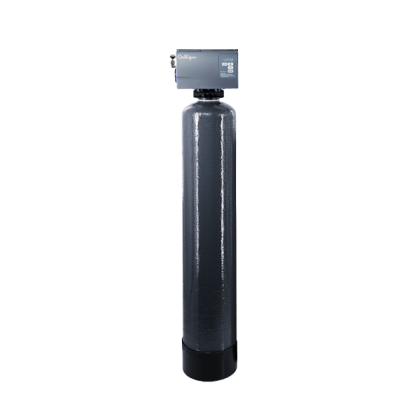
Iron & Sulfur Filtration
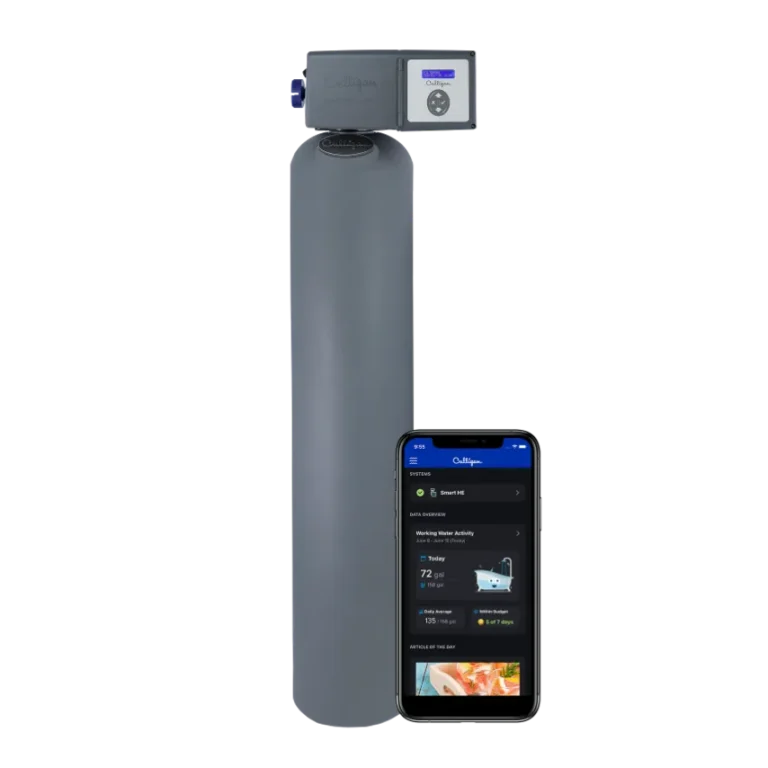
Water Softening
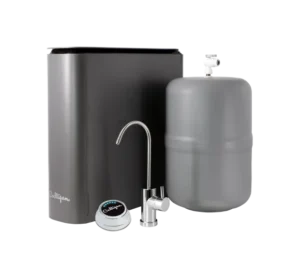
Drinking Water Systems
The Proof
Why Do Houston-Area Homeowners TRUST Our
Well Water Treatment Systems?
We are very pleased with our Culligan system. The whole house and the Osmosis system under the sink in the kitchen were installed. Installation was very seamless and efficient.

They are very well made, the professional quality of the parts and installation are always fantastic. I have had Culligan systems for nearly 40 years. That says a lot!
I will recommend them for all your soft water and filter needs. Top notch installation and service.
Rotten Egg Smell? Rust Stains?
Find Out What’s Really
In Your Houston Area Well Water!
• Fast on-site results, no mailing
• We test iron, manganese, sulfur, hardness and pH
• Flexible sample pickup options

Frequently Asked Well Water Treatment Questions
We Have Answers
Only my hot water smells like sulfur. Why just the hot side?
Because your water heater may be making it. Texas A&M’s well owner guide lists the reaction between a magnesium anode rod inside the heater and sulfate in the water as one of the three sources of hydrogen sulfide, alongside decaying organic matter in the aquifer and bacteria acting on pyrite. If both taps smell, the source is the well. If only the hot tap does, the heater is worth looking at first. Either way it is fixable, and sulfur filtration handles the well side of it.
Will a water softener remove the iron from my well water?
A softener removes hardness, which is calcium and magnesium, and it can handle a limited amount of iron and manganese along the way. If iron is your main problem, you want a dedicated iron filter. A test tells us which situation you’re in.
Is iron a problem in Gulf Coast wells at all?
Less often than you might expect, and we would rather say so than sell you a filter you don’t need. Across the Texas Water Development Board’s samples of the Chicot and Evangeline aquifers, median dissolved iron sits around 0.1 mg/L against a 0.3 mg/L standard, and median manganese is well under its 0.05 mg/L standard. Those are medians though, not a promise about your well, and staining is a local problem wherever it happens. If you are seeing orange in the tub, your well is above the median and a test will show by how much.
Do I need a softener, a filter, or both?
It depends where your well is and how deep it goes. Shallower wells in the northern counties tend toward harder, calcium-rich water and often want softening. Deeper wells toward the coast are often softer already and are better served by reverse osmosis for drinking water. Sulfur can show up in either. We test before we recommend.
Will my water taste salty?
Not from a softener. A properly functioning water softener will never make your water taste salty, because the sodium it adds is far too little to taste. If your well water tastes salty before any treatment, that is the aquifer, and it points toward sodium and dissolved solids rather than hardness.
How does a water softener work?
Through ion exchange. As it removes the calcium and magnesium that make water hard, it replaces those ions one for one with sodium. The amount added is proportional to how hard your water is, and in most cases it isn’t a significant contributor to the sodium in your diet.
Will a softener reverse damage already done to my appliances?
Yes. Once a softener is installed it begins removing the scale that hard water built up. It takes a long time to clear, but it will clear.
Are chemicals added to my water to soften it?
Other than salt or potassium chloride, no. A softener reduces the cleaning supplies and detergents going down your drain, which makes it a net positive environmentally.
How often do I need to add salt?
Modern softeners recharge based on how much water you use and how hard it is. Most of our customers add salt once or twice a year.
Should I be worried about arsenic?
Probably less than the headlines suggest, at least here. Arsenic is a real issue in the Gulf Coast aquifer, but the Texas Water Development Board locates the high-arsenic samples in the southwestern part of the aquifer, around Duval, Webb, Live Oak, Karnes and Jim Wells counties, and ties them to south Texas uranium deposits. Those are two hundred miles from the Houston area. Arsenic has no taste, color or smell, so if you want certainty for your own well it is a simple add-on to a test panel.
My well was flooded. What should I do?
Test it for bacteria before you drink from it, and do not count on chlorination alone. The post-Harvey study of 8,822 private wells across 44 Texas counties found coliform at 1.5 times the normal rate and E. coli at 2.8 times, worse in wells that had been underwater, and found chlorination did not consistently clear it. Only about 4 percent of the potentially affected wells were ever tested.
My well is registered with the groundwater district. Doesn’t that mean it’s monitored?
No, and this catches people out. The Lone Star Groundwater Conservation District requires even exempt domestic wells in Montgomery County to be registered, and the Harris-Galveston Subsidence District permits wells while exempting most single-family household wells under a five-inch casing. Both agencies exist to manage how much water comes out of the ground, because of subsidence. Neither tests what is in it.
Is my well water safe to drink without treatment?
Iron, manganese, sulfur and hardness are aesthetic and nuisance problems at the levels we usually find. Safety questions like bacteria and nitrate are a separate test and worth doing on any private well, more so after flooding or if you are near agriculture or an older septic system. Start with a water test and we’ll tell you honestly which category your results fall into.
How long does installation take?
Most residential systems install in a few hours in a single visit. We deliver the equipment, install it, and set it up, so there’s nothing for you to unbox or assemble.
We’re building a house. When should treatment be designed in?
As soon as the well is drilled and tested. Roughing in space and plumbing for treatment during construction costs far less than retrofitting it into a finished home.
Where should I get started?
Every recommendation we make starts with knowing what is in your water. The test is free, it happens at your house, and it takes about half an hour. You’ll get your numbers explained in plain language and an honest answer about whether you need treatment at all.

Facebook